The Science of Lean: Why the Lean Physique With Abs Beats the Bodybuilder Build
Waist size, strength and how much training you actually need. What the research says about the body worth building after 40.
 Sara Scott· Editor, Executive Abs · Oct 22, 2026
The short version
- Where you carry fat matters more than what the scale says. A bigger waist is linked to a higher risk of death even at a "normal" weight.
- Strength protects health, and you can build it with 3–4 focused sessions a week, not six days in the gym.
- The far end of the size spectrum carries real cardiovascular costs, especially where performance drugs are involved.
- Lean, strong and active is the profile the research keeps rewarding. It’s also the one that shows abs.
Ask most men what "getting in shape" looks like and they picture getting bigger. Bigger arms, bigger chest, bigger numbers on the bar. It’s an image borrowed from bodybuilding, and it’s so familiar that few people stop to ask whether it’s the healthiest body to aim for.
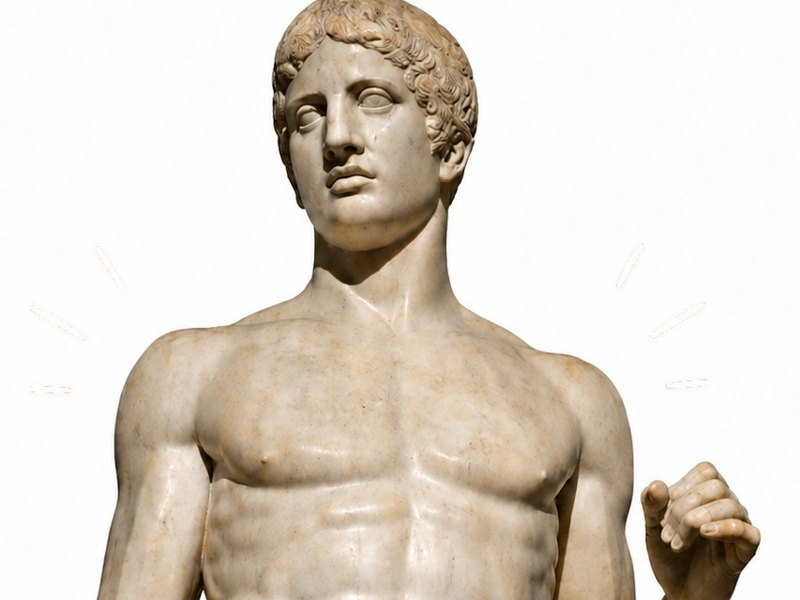
The research has a fairly clear answer. When scientists follow hundreds of thousands of people for years, the body that keeps coming out ahead isn’t the biggest one. It’s the one with a small waist, real strength and an active heart. That’s a lean body with visible abs. At Executive Abs we call it the Executive Body.
Here’s what the evidence says, one marker at a time.
1. Your waist tells you more than your weight
The scale can’t tell muscle from fat, or fat under the skin from fat packed around your organs. That deeper fat is visceral fat, and it’s the kind most strongly tied to heart disease, type 2 diabetes and early death.
The largest study of the question followed 359,387 adults in nine European countries for almost a decade. After accounting for BMI, men in the highest fifth for waist size had about twice the risk of death of men in the lowest fifth.1
Bigger waist, higher risk, even at the same BMI
Relative risk of death, largest vs smallest waist (top vs bottom fifth), adjusted for BMI
Source: Pischon et al., New England Journal of Medicine, 2008. EPIC cohort, n = 359,387, average follow-up 9.7 years.
A US study pushed the point further. Men with a normal BMI but a high waist-to-hip ratio had roughly twice the mortality risk of men classed as overweight or obese by BMI alone.2 A man can look "fine" on a chart and still carry his weight in the riskiest place.
A meta-analysis of 31 studies and more than 300,000 adults found that waist-to-height ratio was a better early-warning tool than BMI or waist size alone. Its authors recommend a simple rule: keep your waist to less than half your height.3
Visible abs are about as clear a sign as you can get that your waist is in a good place. You can’t see your abs through a thick layer of midsection fat. That doesn’t make abs a medical test, but it does mean the look and the health marker point the same way.

“Abs are the crown jewel of health, wellness and status.”Ryan Engel · Founder, Executive Abs
2. Strength protects you, and 3–4 sessions a week is enough
None of this means skipping the weights. Muscle and strength are some of the best predictors of a long, healthy life that researchers have found.
The PURE study measured grip strength in nearly 140,000 adults across 17 countries. Every 5 kg drop in grip strength was linked to a 16% higher risk of death from any cause, and grip strength predicted death better than systolic blood pressure did.4 A separate study of 8,762 men aged 20 to 80 found that the stronger two-thirds had about a quarter lower risk of death than the weakest third, even after accounting for body weight and cardio fitness.5
The question is how much strength training you need to get that benefit. A 2022 meta-analysis of 16 studies in the British Journal of Sports Medicine found that strength training was linked to a 10–17% lower risk of death, heart disease, cancer and diabetes. The biggest reduction showed up at around 30–60 minutes of strength work a week, and beyond that the extra benefit was unclear.6 In practice, that fits comfortably into 3–4 focused sessions a week.
The health payoff from strength training comes early
Schematic of the dose–response pattern reported for all-cause mortality. Lower on the chart = lower risk.
Illustrative shape based on Momma et al., British Journal of Sports Medicine, 2022 (16 cohort studies). Not plotted from raw data.
Training studies tell the same story. In one eight-week trial with trained men, a single set per exercise, done in three sessions of about 13 minutes a week, produced strength gains similar to programmes with three and five times the volume. More volume grew muscles larger, but it didn’t make the men meaningfully stronger.7 A review of time-efficient training reached a similar conclusion. A handful of multi-joint lifts (a push, a pull and a leg movement), done consistently, cover most of what a busy adult needs.8
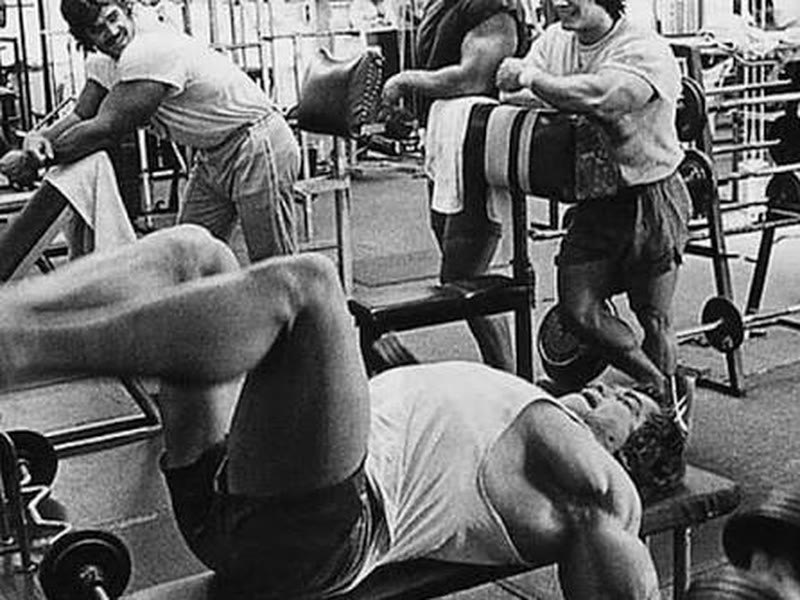
Bodybuilding volume exists for a different reason. If your goal is maximum muscle size for a stage, more sets make sense. If your goal is a lean, strong, healthy body, most of that extra volume buys you time spent rather than health gained.

3. The heart wants you active, not just big
Strength is half the picture. In a study of nearly 480,000 US adults, people who did muscle-strengthening work alone had an 11% lower risk of death. Those who did aerobic activity alone had a 29% lower risk. Those who did both had a 40% lower risk.9
Strength plus aerobic activity beats either one alone
Risk of death from any cause, compared with meeting neither activity guideline (lower is better)
Source: Zhao et al., BMJ, 2020. US National Health Interview Survey, n = 479,856.
Aerobic activity is also the kind of exercise with the strongest evidence for shrinking visceral fat. A meta-analysis of 15 trials found that moderate-to-high intensity aerobic training reduced visceral fat even without a calorie-controlled diet.10 In another trial, men who exercised reduced abdominal and visceral fat even when their total weight barely moved.11
This is where a lean, agile body has a built-in advantage. It’s light enough to move, run, play and recover, and strong enough to protect joints and posture. A body built only for size tends to trade some of that away.
4. At the far end of "big", the costs add up
Most people who lift weights are not taking anything. But at the far end of the size spectrum, where the goal is more muscle than the body naturally carries, performance-enhancing drugs are common enough that medical bodies have studied them closely.
- An Endocrine Society scientific statement links anabolic steroid use to higher rates of cardiovascular, psychiatric, hormonal and liver problems, and notes that most users aren’t competitive athletes but recreational weightlifters chasing a look.12
- Men who had used steroids long-term had weaker heart pumping function (ejection fraction 52% vs 63%) and more coronary artery plaque than weightlifters who hadn’t.13
- In Denmark, men who tested positive for steroids at gyms had about three times the mortality of matched controls.14
- A 2025 European Heart Journal study of 20,286 male competitive bodybuilders found sudden cardiac death was a major cause of death. Professionals had about five times the risk of amateurs.15
None of this is a judgement on anyone who trains for size. It’s a reminder that the stage physique is an extreme. It sits at the edge of what the body can carry, and it was never designed as a health target. Copying its methods while hoping for a healthier result is like training for a sprint to get better at a marathon.
The stage physique is an extreme. It was never designed as a health target.
5. After 40, the case for lean gets stronger
Age changes the maths. In the Massachusetts Male Aging Study, men’s total testosterone fell about 1.6% a year, and free testosterone fell faster. Men in better health had noticeably higher levels.16 Strength also falls faster than muscle mass as we age, two to five times faster according to one review.17
That points to a clear priority list for a man in his 40s, 50s or 60s. Keep the waist small, keep strength high and keep the heart working. Chasing extra size, more recovery and more hours in the gym moves further from that list each decade.
“You can have abs over 40. You can have abs over 50. You can have abs over 60. But you must take a straight path.”Ryan Engel · Founder, Executive Abs
6. Hollywood already knows
When filmmakers need a man to look like a hero, they don’t cast for size. When Brad Pitt trained to play Achilles in Troy (2004), the character was "supposed to be the greatest warrior of all time," as he put it, so he had to get in shape.18 He started about six months before filming, ate protein-focused, low-carb meals and quit smoking.19 His trainer has said the focus was the back and arms rather than a big chest, and that Pitt never had trouble leaning out.20
The result was lean, broad-shouldered and defined, with visible abs, not a bodybuilder’s size. It’s the same profile the research keeps rewarding: a small waist, real strength and a body that can move. For the full story, read The Ideal Male Physique: What Troy and the Greek Statues Got Right.
What the evidence rewards
| Marker | Lean, strong, active | Built for maximum size |
|---|---|---|
| Waist and visceral fat | Small waist; abs visible | Varies. "Bulking" phases often add fat around the middle |
| Strength | High, maintained for decades | High |
| Training time | 3–4 focused sessions a week | Often 5–6 sessions a week |
| Heart and aerobic fitness | Prioritised | Often secondary to size |
| Joints and mobility | Prioritised | Heavier loads, more wear |
| Drug exposure | None needed | Common at the extreme end |
Summary of the studies cited in this article.
The bottom line
The body that looks best in a suit and on the beach is also the one the research keeps rewarding: lean through the middle, strong enough to matter and fit enough to keep going. You don’t have to live in a gym to build it. The evidence suggests you’d be better off not trying to.
That’s the whole idea behind the abs-first approach. Aim straight at the healthy target instead of taking the long way round through someone else’s sport.
One-to-one coaching built around your calendar, your travel and your starting point. Three to four sessions a week, max. For busy executives, founders and CEOs only.
See the method →References
- Pischon T, et al. General and abdominal adiposity and risk of death in Europe. N Engl J Med. 2008;359:2105–20. pubmed.ncbi.nlm.nih.gov/19005195
- Sahakyan KR, et al. Normal-weight central obesity: implications for total and cardiovascular mortality. Ann Intern Med. 2015;163:827–35. pubmed.ncbi.nlm.nih.gov/26551006
- Ashwell M, et al. Waist-to-height ratio is a better screening tool than waist circumference and BMI for adult cardiometabolic risk factors: systematic review and meta-analysis. Obes Rev. 2012;13:275–86. pubmed.ncbi.nlm.nih.gov/22106927
- Leong DP, et al. Prognostic value of grip strength: findings from the Prospective Urban Rural Epidemiology (PURE) study. Lancet. 2015;386:266–73. doi.org/10.1016/S0140-6736(14)62000-6
- Ruiz JR, et al. Association between muscular strength and mortality in men: prospective cohort study. BMJ. 2008;337:a439. pubmed.ncbi.nlm.nih.gov/18595904
- Momma H, et al. Muscle-strengthening activities are associated with lower risk and mortality in major non-communicable diseases: a systematic review and meta-analysis of cohort studies. Br J Sports Med. 2022;56:755–63. pubmed.ncbi.nlm.nih.gov/35228201
- Schoenfeld BJ, et al. Resistance training volume enhances muscle hypertrophy but not strength in trained men. Med Sci Sports Exerc. 2019;51:94–103. pubmed.ncbi.nlm.nih.gov/30153194
- Iversen VM, et al. No time to lift? Designing time-efficient training programs for strength and hypertrophy: a narrative review. Sports Med. 2021;51:2079–95. pubmed.ncbi.nlm.nih.gov/34125411
- Zhao M, et al. Recommended physical activity and all cause and cause specific mortality in US adults: prospective cohort study. BMJ. 2020;370:m2031. pubmed.ncbi.nlm.nih.gov/32611588
- Vissers D, et al. The effect of exercise on visceral adipose tissue in overweight adults: a systematic review and meta-analysis. PLoS One. 2013;8:e56415. pubmed.ncbi.nlm.nih.gov/23409182
- Ross R, et al. Reduction in obesity and related comorbid conditions after diet-induced weight loss or exercise-induced weight loss in men. Ann Intern Med. 2000;133:92–103. pubmed.ncbi.nlm.nih.gov/10896648
- Pope HG Jr, et al. Adverse health consequences of performance-enhancing drugs: an Endocrine Society scientific statement. Endocr Rev. 2014;35:341–75. pubmed.ncbi.nlm.nih.gov/24423981
- Baggish AL, et al. Cardiovascular toxicity of illicit anabolic-androgenic steroid use. Circulation. 2017;135:1991–2002. pubmed.ncbi.nlm.nih.gov/28533317
- Horwitz H, et al. Health consequences of androgenic anabolic steroid use. J Intern Med. 2019;285:333–40. pubmed.ncbi.nlm.nih.gov/30460728
- Vecchiato M, et al. Mortality in male bodybuilding athletes. Eur Heart J. 2025;46:3006–16. pubmed.ncbi.nlm.nih.gov/40393525
- Feldman HA, et al. Age trends in the level of serum testosterone and other hormones in middle-aged men: longitudinal results from the Massachusetts Male Aging Study. J Clin Endocrinol Metab. 2002;87:589–98. pubmed.ncbi.nlm.nih.gov/11836290
- Mitchell WK, et al. Sarcopenia, dynapenia, and the impact of advancing age on human skeletal muscle size and strength; a quantitative review. Front Physiol. 2012;3:260. pubmed.ncbi.nlm.nih.gov/22934016
- CBS News / Associated Press. Pitt kicks butts for Troy role (citing Vanity Fair, June 2004). 4 May 2004. cbsnews.com
- Windy City Times. Manly pursuits: Brad Pitt in Troy. 19 May 2004. windycitytimes.com
- Men’s Health Australia. Brad Pitt’s Troy workout. menshealth.com.au
This article is for general information and is not medical advice. Speak to your doctor before making major changes to diet or training. Observational studies show associations, not proof of cause.